

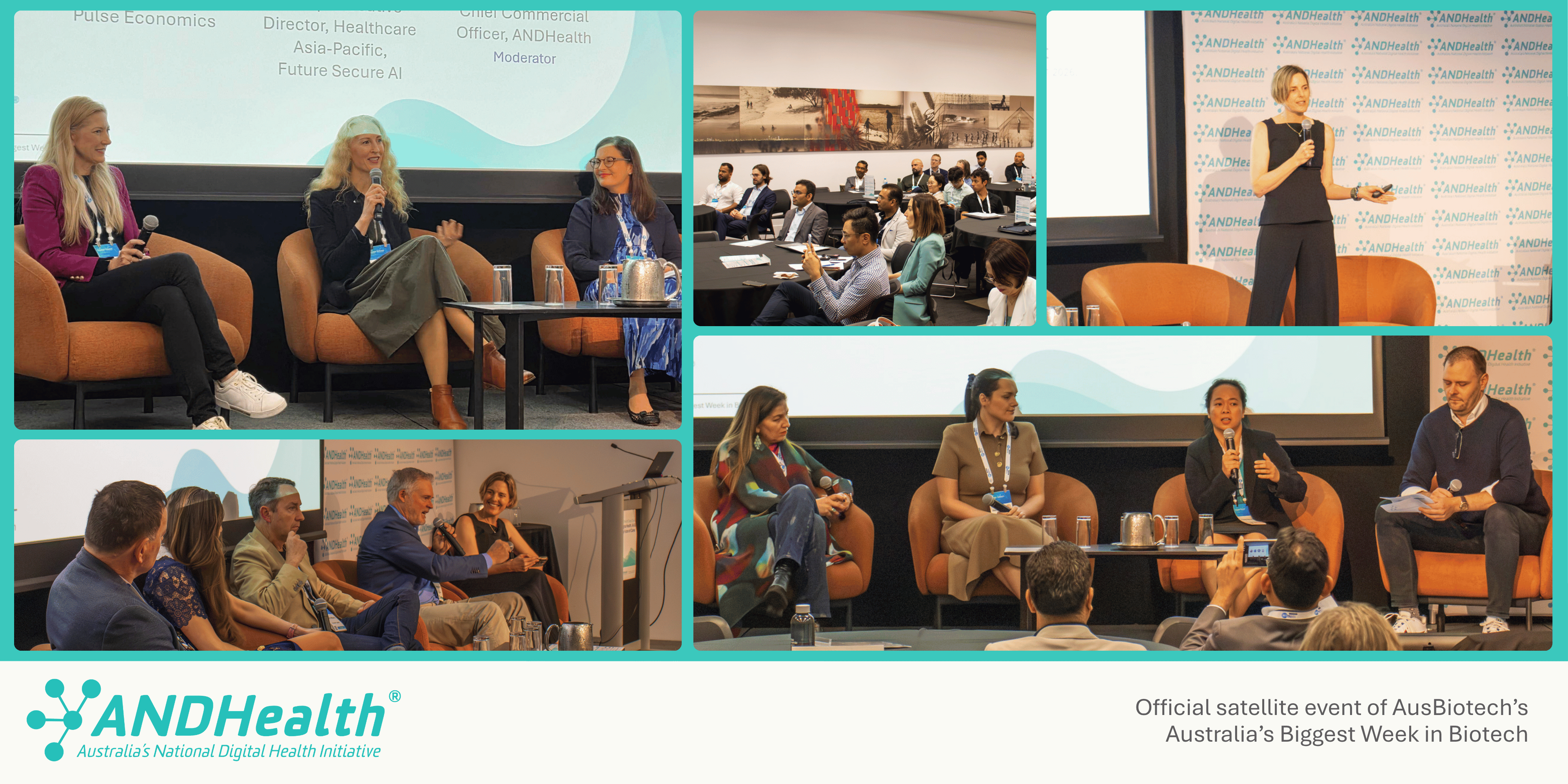
Bringing together leaders from healthcare, digital health and industry, the program explored what attracts investment, what supports adoption and what it takes to deliver lasting value in healthcare.
Two keynotes and three panel discussions brought investor, founder and healthcare perspectives to the practical challenges of commercialisation, workforce capacity and responsible AI use, with evidence, trust and an understanding of the people and systems that turn innovation into care emerging as common priorities.
Missed out? Here’s a closer look at the key themes explored across the program.
CAPITAL HASN’T DISAPPEARED. THE BAR HAS GONE UP.
Sarah Meibusch, Partner and Head of Healthcare at OneVentures, set the tone with a data-driven keynote exploring why healthcare innovation is at a pivotal moment, as rapid advances in AI open new opportunities and reshape what it takes to succeed.
Sarah unpacked four fundamental shifts in healthcare since the launch of ChatGPT in 2022:
- Patients now have direct access to medical intelligence
- AI is changing how clinicians work
- AI is becoming part of clinical workflows and decision-making
- Technology is creating new ways to reach patients
She also introduced the concept of Agentic Care, adding another dimension to the discussion of AI’s evolving role in healthcare.
Turning to the investment landscape, Sarah highlighted the rising bar for investment and the growing importance of clinical and commercial evidence, longer runways and a broader mix of financing options. She emphasised the need to build lasting value, with clear pathways to growth and exit, as AI capabilities and established players continue to advance.
INVESTOR INSIGHTS: WHAT MAKES DIGITAL HEALTH AND AI WORTH BACKING?
Carrying these themes into the panel conversation, Sarah invited the audience to identify one point of disagreement or curiosity to explore further with investors themselves, opening a discussion on where competitive advantage lies beyond the technology and how to sustain it.
The lively discussion explored how differentiated data, trusted relationships and integration into clinical workflows can create lasting value that is harder to replicate.
Panellists also emphasised the importance of knowing the buyer from day one, with a clear understanding of who will use, pay for and procure a solution guiding its development rather than becoming an afterthought once the product is built.
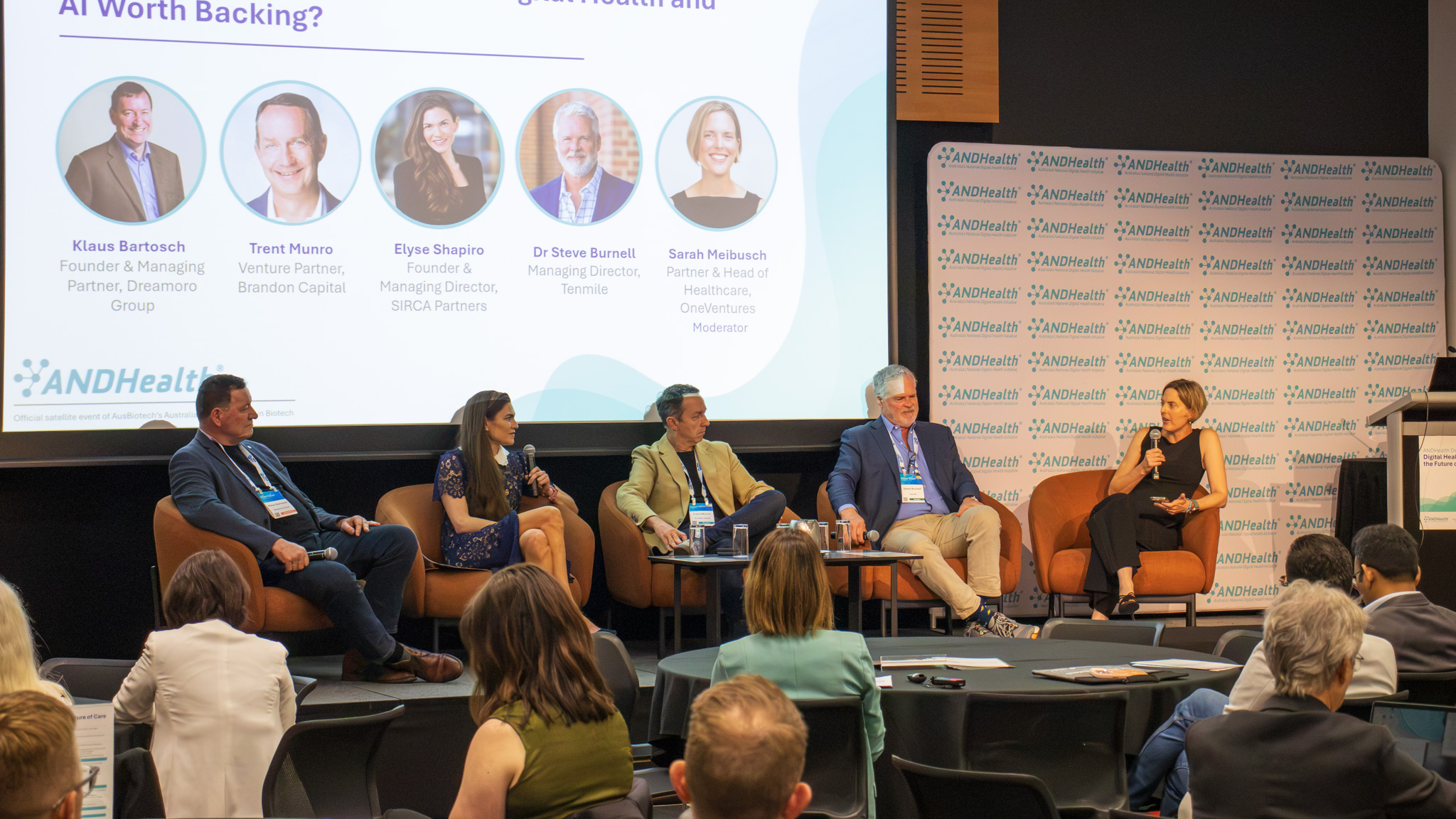
From left to right: Klaus Bartosch, Elyse Shapiro, Trent Munro, Dr Steve Burnell and Sarah Meibusch
THE HEALTH AI WORKFORCE: FROM PRODUCTIVITY PROMISE TO SAFER, BETTER CARE
Drawing on her experience advising the UN Ebola Emergency Response in West Africa, Dr Rachel Swift, Group Executive Director, Healthcare Asia-Pacific at Future Secure AI, made a
compelling case for looking beyond time saved to what AI makes possible for care. She explored how AI can support clinicians rather than replace them, reducing administrative burden and freeing up time to focus on patients.
Rachel challenged the audience to consider not only the risks of deploying AI, but also the cost of inaction. Time and resources spent navigating administrative processes are time and resources unavailable for care, yet reducing that burden does not automatically translate into better outcomes.
The greater opportunity lies in rethinking how teams work. A rostering case study illustrated how this can work in practice, showing how AI co-workers could simplify staff availability and absence reporting, freeing rostering teams to focus on workforce planning and retention.
Realising this potential means fitting AI into existing workflows and systems, while exploring cooperative models that make it more accessible, so it supports teams rather than adding complexity.
BUILDING AI-ENABLED HEALTH SOLUTIONS THAT SCALE
Moderated by Alex Barty, Director, Non-Dilutive Investments Programs & Portfolio, ANDHealth, this panel brought together founders across radiation oncology, bladder health and cardiac rehabilitation to share first-hand lessons on turning clinical insights into trusted products and securing adoption.
From clinical trials and regulatory strategy to reimbursement, procurement and implementation, the discussion highlighted the importance of developing these pathways in parallel, rather than treating them as separate milestones on the road to commercialisation.
Products must also fit into clinical workflows and patients’ lives, with feedback during trials helping founders identify practical barriers and refine their solutions.
Panellists reframed regulatory compliance as an opportunity to build trust, with proactive registration, robust quality systems and a clear understanding of patient risk signalling credibility and long-term commitment to customers. That commitment extends beyond market entry, with cybersecurity, post-market surveillance and customer education requiring ongoing attention and resources.
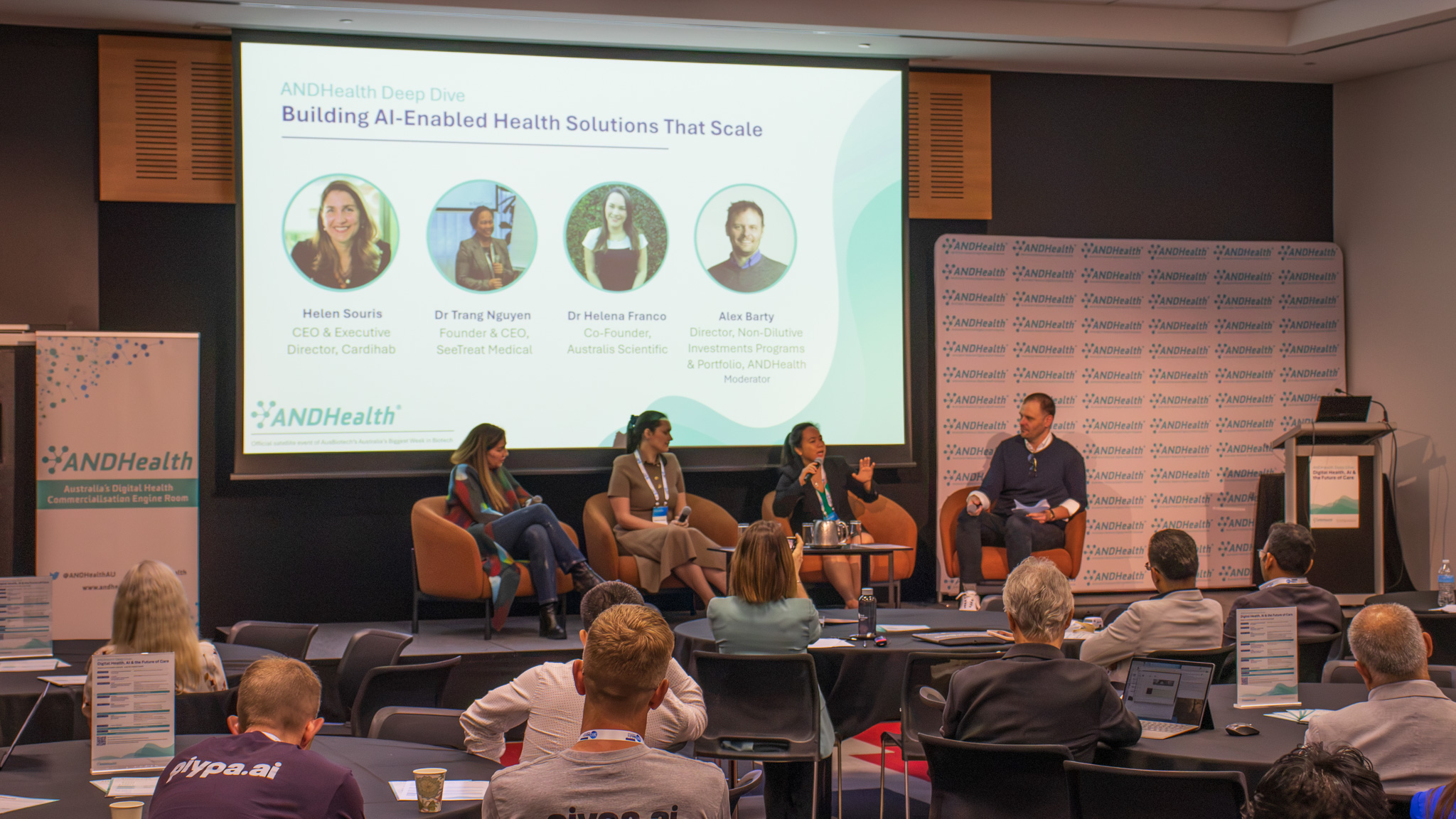
From left to right: Helen Souris, Dr Helena Franco, Dr Trang Nguyen and Alex Barty
THE TRUST TEST FOR AI IN HEALTHCARE
To wrap up the day, Anne O’Neill, Chief Commercial Officer, ANDHealth, led a discussion on what makes AI trustworthy in healthcare, moving beyond technical capability to examine evidence, governance and accountability.
Panellists explored how transparency about a tool’s capabilities, limitations, data governance and oversight can be balanced with intellectual property protection. Clear agreements around ownership, licensing and improvements, together with auditability and traceability, were highlighted as foundations for trust.
The discussion also emphasised designing evidence around the decisions it will support, engaging providers and payers early to understand their differing requirements for assessing clinical value, adoption and reimbursement.
When it came to responsibility for errors involving AI and how governance and regulation can keep up, panellists pointed to the need for education, clear oversight and honest communication.

From left to right: Dr Rachel Swift, Oona Reardon, Sandra Camilleri and Anne O’Neill
Across the day, a consistent message emerged that the future of digital health depends on more than what technology can do. It requires evidence, trust and a clear understanding of the people and systems it is designed to support.
For AI, that means using it where it genuinely adds value, not simply because it is available.
Stay tuned – ANDHealth Unfiltered heads west next! Follow us on Humanitix to be notified when new events go live.
ANDHealth Deep Dive was an official satellite event of AusBiotech’s Australia’s Biggest Week in Biotech.


